
A quiet revolution: neutralizing noise, vibration, and harshness in vehicle design
By Ron Krotwaar
System Expert, Envalior
Among the many strategies for reducing noise, vibration, and harshness (NVH) in vehicle design, material selection is key to delivering a quieter and more comfortable ride. This is particularly important given the rapid growth of e-mobility around the world. Electric vehicles (EVs) are much quieter than their ICE counterparts, meaning that every squeak and rattle is felt more acutely by passengers. Envalior offers a range of tailored material solutions designed to reduce NVH, including EcoPAXX®, Fortii®, and Akulon® grades optimized for sound-damping performance.
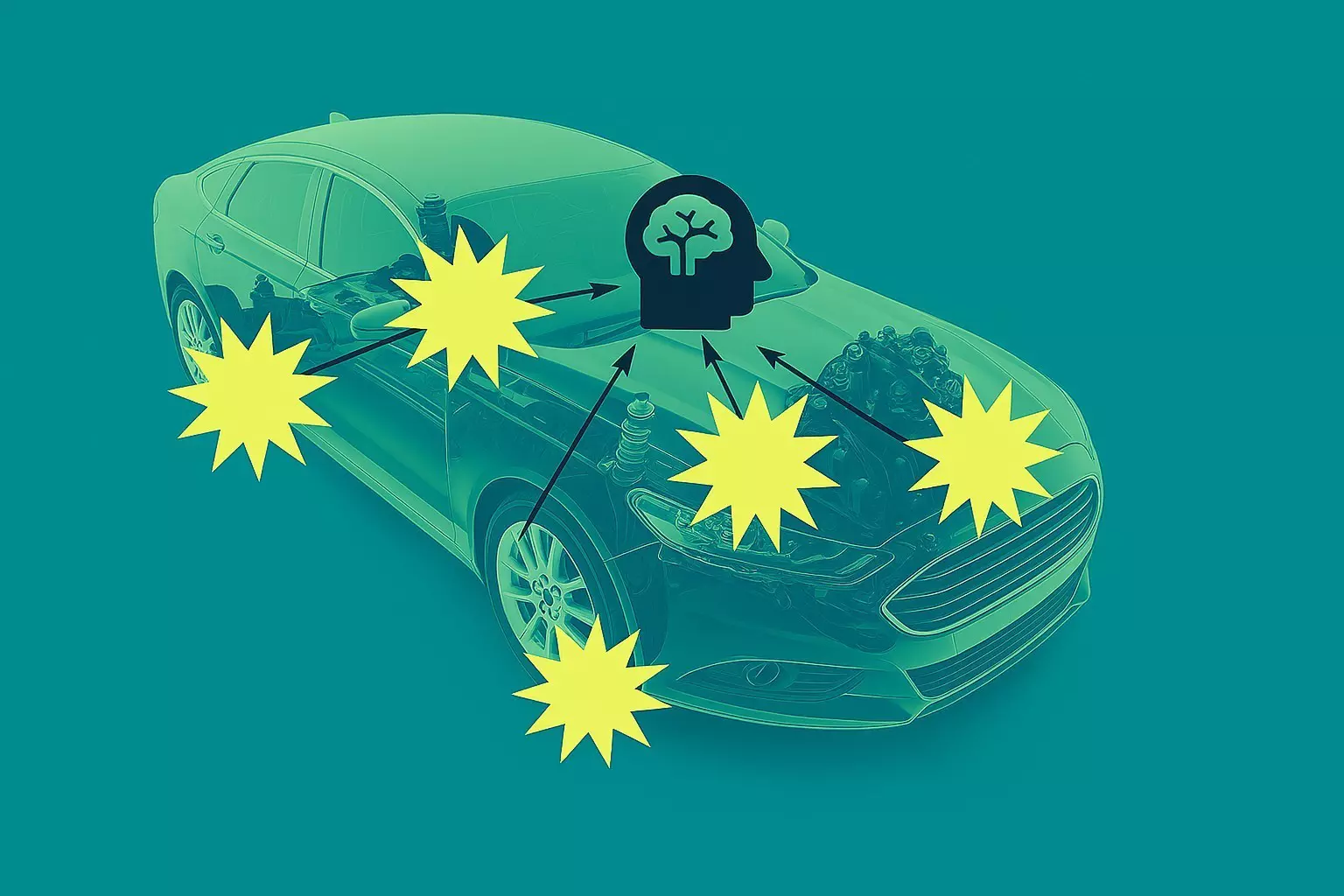
A strategic approach to reducing NVH in vehicles
Each material has a unique damping behaviour, meaning how effectively it can absorb shocks and sound waves to prevent structure-borne and airborne-noise in vehicles. This is dependent on factors such as moisture uptake, stiffness, and damping properties. Of course, this damping behaviour needs to be balanced with other design considerations, such as lightweighting, material robustness, and hydrolysis resistance. A strategic approach to material selection can therefore help to make the difference between an unpleasant, noisy ride and a smooth, relaxing experience – helping automakers meet modern consumer expectations for comfort.
Understanding NVH and the effects of different frequency ranges:
- Vibrations occur in lower frequency ranges below 100 hertz (Hz) and can be physically felt through contact points like the steering wheel or door panels.
- Harshness represents an intermediate frequency range, from 10 Hz to several hundred Hz, creating unpleasant sounds that are particularly jarring to the human ear.
- Noise operates in higher frequencies, covering the range of human hearing (up to ~20 kHz).
Which material properties influence NVH performance?
Standard plastics already dampen vibrations much better than metals like steel or aluminum, and three key factors can be “played with” to fine-tune NVH performance. First, stiffness determines how easily vibrations travel through a component. Stiffer materials can better resist vibration but may also transmit it more readily. Through change in stiffness via design and/or material, will lead to different resonance behaviour. Second, damping ability measures how well a material absorbs vibrational energy rather than passing it along. Third, weight affects the natural vibration frequency of components, with lighter parts vibrating at higher frequencies and heavier parts vibrating at lower frequencies.
Key impacts of noise, vibration and harshness include:
- Unpleasant driving experience
- Increased driver fatigue and distraction
- Reduced vehicle quality perception
- Component fatigue and failure
Temperature and moisture: The environmental challenge
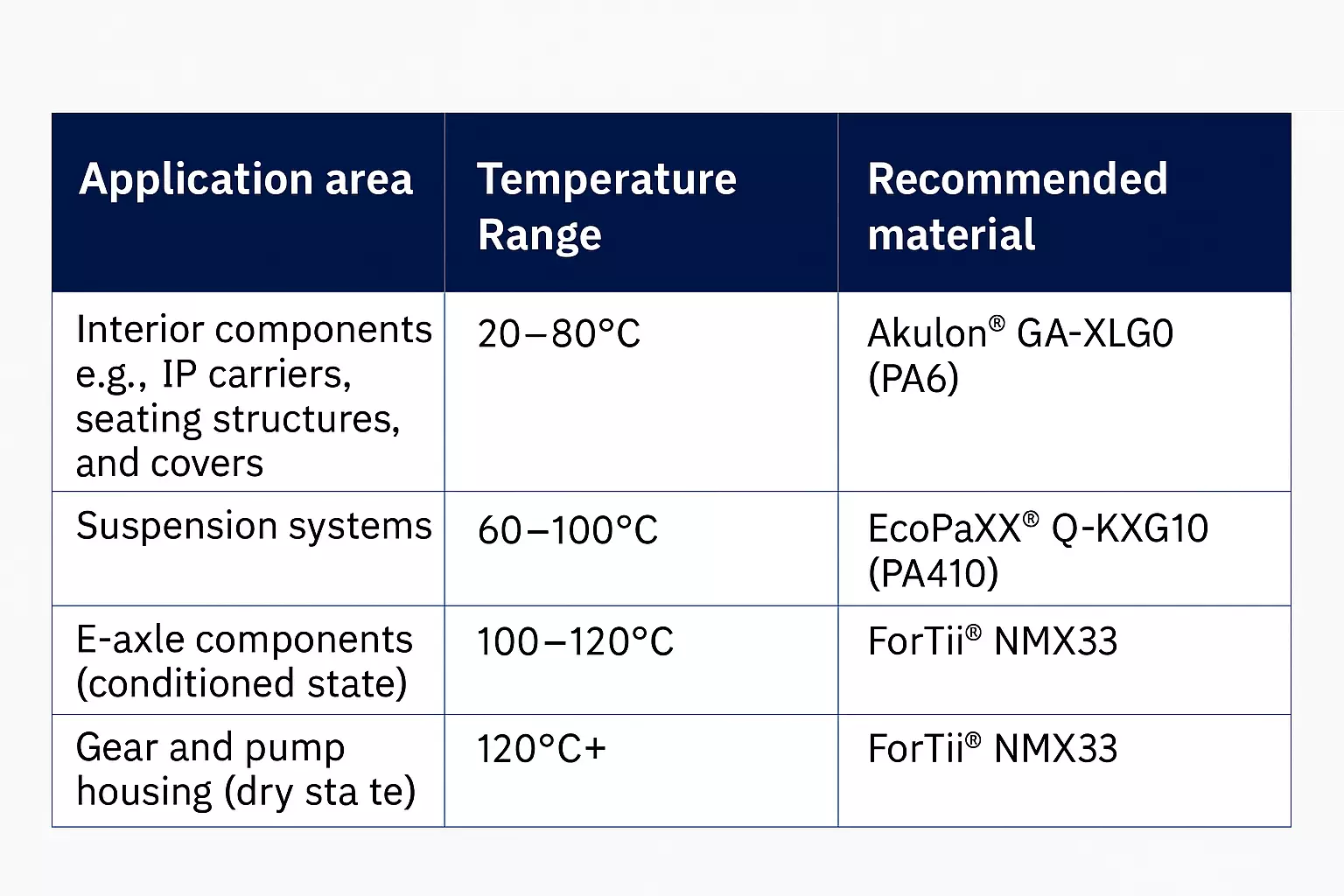
Material properties are not constant across all operating conditions. Polymers like polyamides PA6, PA66, PPA, and PA410 absorb moisture, affecting both damping performance and stiffness. This is particularly important since environmental conditions within the vehicle can vary significantly. Interior components operate between room temperature and up to 60-70°C, suspension systems may reach 110°C, while gear and pump housings can reach even higher temperatures. Because of this variability, there’s no single solution for all conditions; materials must be selected based on specific application requirements. That’s the thinking behind our specialized NVH portfolio. Our specialized NVH materials are providing significantly higher damping values than their standard equivalents, as well as over a broader temperature range, making them less sensitive to the above mentioned challenge.
Finding the right NVH-optimized material for your application
When it comes to NVH, vehicle designers want materials that absorb vibrations effectively while still providing the structural strength and other mechanical properties needed for automotive components. To this, we’ve developed a dedicated range of specialized high-damping grades, designed to deliver optimized NVH performance.
For example, Akulon® GA-XLG0 offers enhanced sound-damping for interior components in lower temperature ranges. EcoPaXX® Q-KXG10 delivers exceptional NVH control for intermediate-temperature applications such as suspension systems. ForTii® NMX33 tackles the most high-temperature environments, including gear and pump housings, maintaining superior performance in both conditioned and dry states.
From concept to production: Comprehensive development support
Choosing the right material for the right component is only the beginning of the journey toward successful NVH management. We support automotive manufacturers throughout every stage of the development process, from initial concept to series production. This includes guiding your material selection, helping to evaluate the costs of converting metal to plastic components, running advanced simulations to predict performance, and creating prototypes for early testing. In addition, we can work together to conduct failure mode and effect analysis (FMEA) to identify potential design risks.
Envalior’s end-to-end development support includes:
- Concept development
- Detailed engineering design
- Performance analysis and evaluation
- Process enhancement and optimization
- Component and system validation
Your roadmap to NVH success
The automotive industry’s “quiet revolution” is just getting started. As EVs gain mainstream adoption and autonomous driving transforms cars into “third spaces” – more living room than transport – consumer expectations for refinement are soaring. Smart manufacturers are preparing for this shift, recognizing that tomorrow’s vehicles must deliver whisper-quiet performance in every component. Strategic material selection and first-time-right design principles are becoming essential for automakers leading this evolution. Those who act now will position themselves to define the new standards for automotive comfort and sophistication – one component at a time.
Want to learn more? Watch our TechXchange webinar with Ron Krotwaar, Advanced Development Expert – Lightweight Solutions, to get the full story.
Get instant answers to your material challenges

Ron Krotwaar is system expert in lightweighting and holds a Master of Science Degree in Mechanical Engineering obtained at the Technical University of Eindhoven. Since 1999 Ron has held many roles at Envalior, most recently focusing on lightweighting, automotive powertrain, structural parts and robotic arms.