
Blog
5 reasons why you should consider Akulon® RePurposed for your next product design
Sustainability is becoming increasingly important as we – manufacturers and consumers – recognize its significance for future generations. Many manufa...
By Artur Völk
Head of Circular and Low Carbon Solutions Performance Materials
Plastic waste is widespread in the ocean. It can be found on beaches, in marine animals, and even in the depths of the Mariana Trench. One of the biggest problems is discarded fishing nets, which account for nearly ten percent of all plastics in the world’s oceans, according to the United Nations Environment Programme. A recycling initiative from Envalior is working to provide a local solution to this global problem.
Every year, hundreds of thousands of marine animals die as a result of ocean pollution, with discarded fishing nets a major contributor to this issue. An estimated 640,000 tons of fishing nets are left in the ocean annually. These abandoned nets constitute one of the largest sources of polyamide waste in marine environments.
Most fishing nets are made from high-viscosity PA6, which can be recycled into PA6 granules. These recycled granules can then be compounded with reinforcing agents and performance-enhancing additives to meet the requirements of various applications.
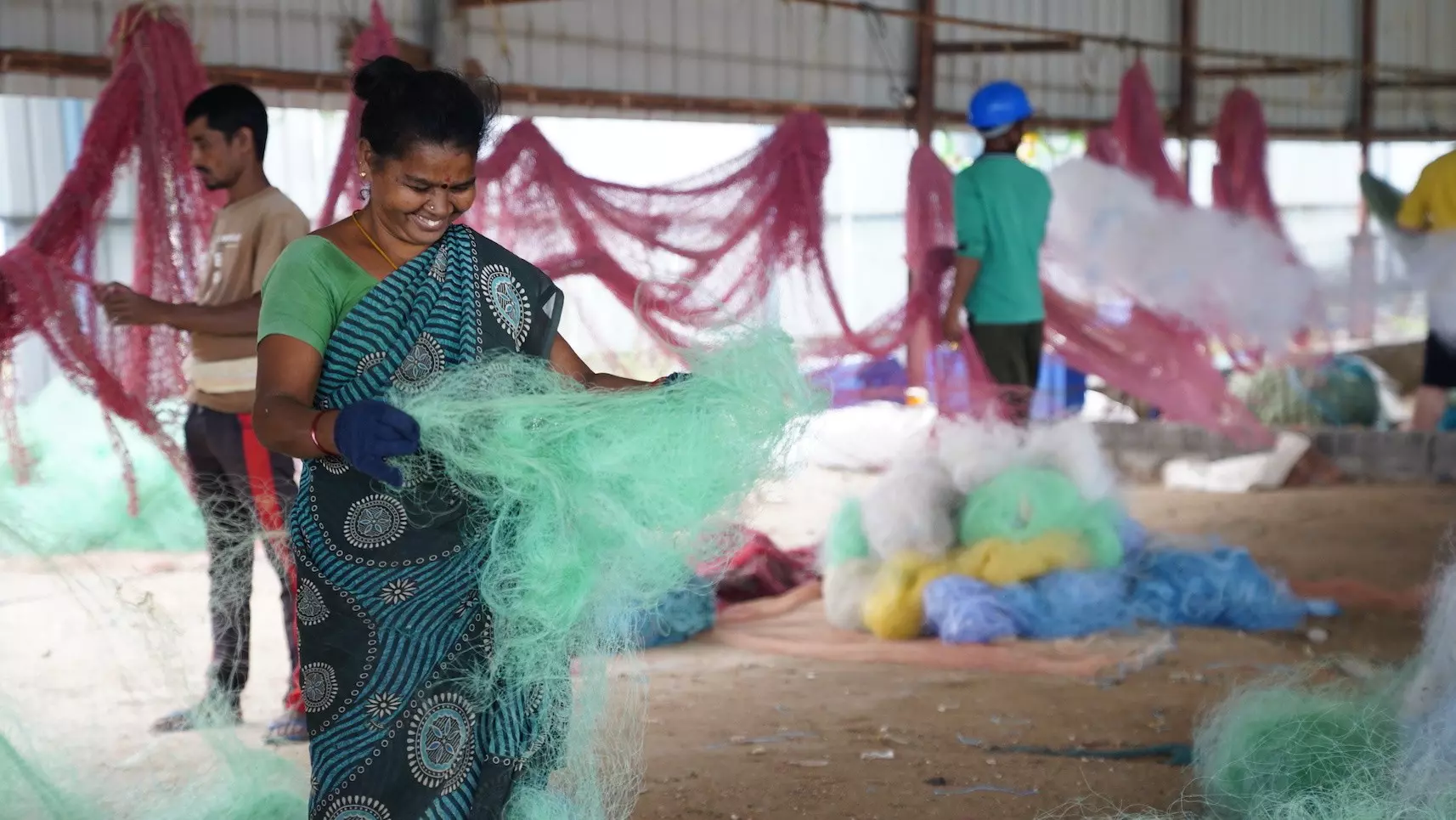
Recycling fishing nets may appear straightforward, but it is a complex process. The collection and processing of fishing nets present logistical challenges, as they vary in color and are discarded across many different locations. Fishing gear is often heavily contaminated and the material can be degraded due to prolonged exposure to seawater and sunlight. As a result, recycling requires a multi-step process that includes quality inspection, sorting, cleaning, shredding, and extrusion before the material can be used in compounds.
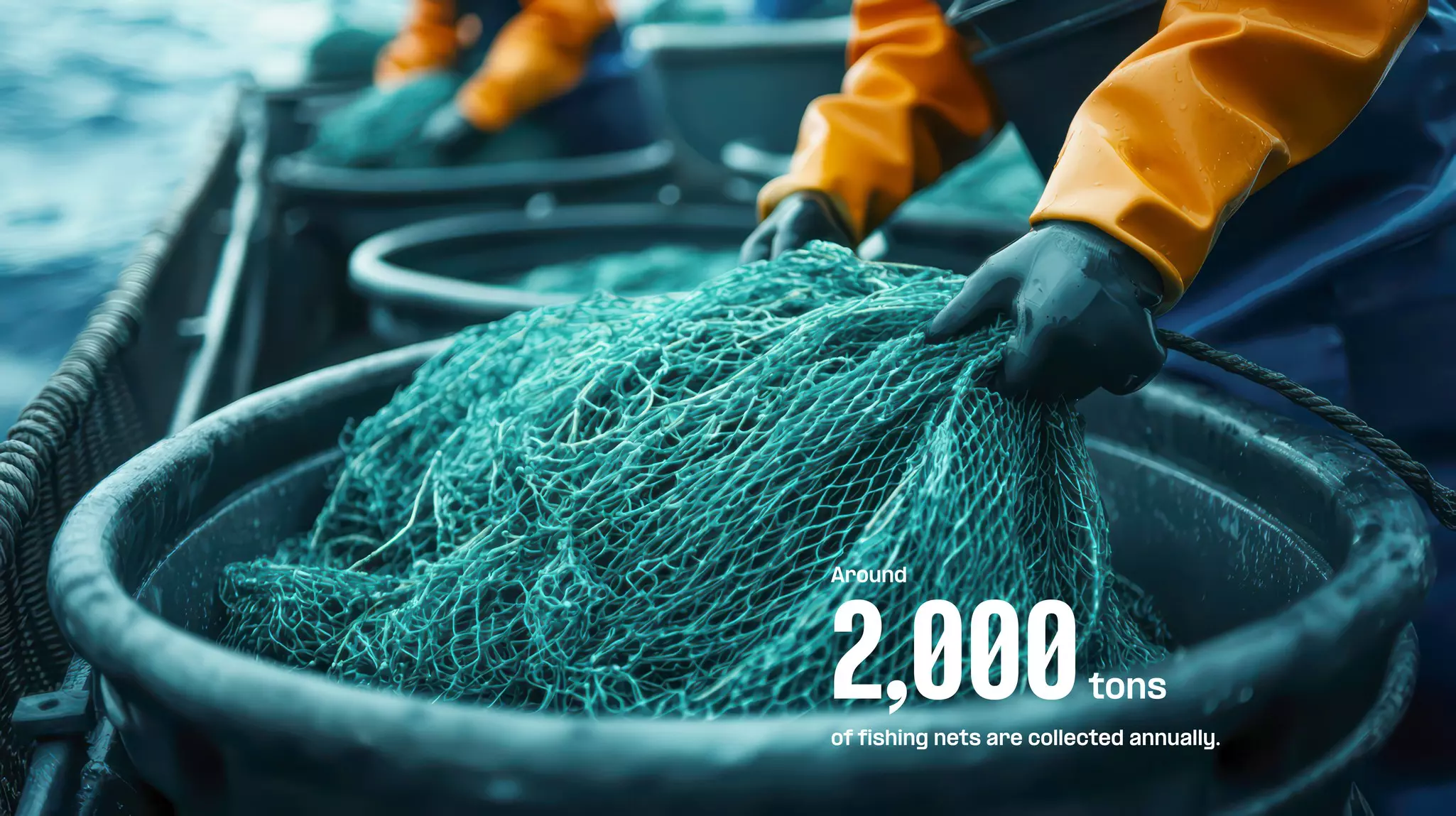
Successfully addressing these challenges represents a major achievement of Envalior’s recycling program. Around 2,000 tons of fishing nets are collected annually in India by a supplier, with sourcing activities covering the country’s coastal regions. At the same time, the program has created 300 jobs along the local value chain.
Discarded fishing nets are brought into a circular economy through targeted collection efforts. By collecting these nets, Envalior gives workers in the fishing industry a reason not to dispose of used nets in the water, contributing to cleaner oceans and coastlines. The recycling program also supports long-term employment in the region, as reliable supply sources are required. This process results in Akulon® RePurposed (renamed Durethan® P25-95R2), a compound made from 25-95 percent recycled PA6 with a performance profile close to that of virgin material. The recycled polymer is repurposed and used by customers worldwide in applications such as automotive, consumer goods, electronics, sports equipment, and furniture.
The 30 percent glass fiber reinforced variant, Akulon RePurposed RE30, offers strong mechanical properties and high durability, making it suitable for demanding applications in sports equipment, furniture, and industrial components. In addition to its functional performance, this grade of Akulon® RePurposed has a significantly lower environmental impact, with a product carbon footprint that is more than 60 percent lower than that of comparable virgin-based material. *
These measures illustrate how recycling can be applied to complex waste streams, such as discarded fishing nets. In this way, Envalior contributes to reducing marine pollution, securing secondary raw materials, and supporting more sustainable and resilient value chains while creating local jobs with global impact.
(*) Comparison refers to cradle-to-gate carbon footprint values of Akulon® RePurposed RE30 and virgin polyamide 6 (PA6) for the European market. Conclusions may change after the publication date. For the most current information, please contact Envalior.

Artur Völk is a dedicated professional in the field of sustainability, currently serving as Circular & Low Carbon Solutions Lead - Performance Materials at Envalior and a lecturer in Sustainability at Hochschule Bonn-Rhein-Sieg. Artur previously held the position of Senior Sustainability Manager at LANXESS and has experience in various roles including quality management and product management. Artur pursued a Master's degree in Business Sustainability Management at the University of Cambridge, alongside other advanced studies in Applied Polymer Sciences and Material Science with a focus on sustainability.
Sustainability is becoming increasingly important as we – manufacturers and consumers – recognize its significance for future generations. Many manufa...

At Envalior, we’re committed to providing our customers with sustainable solutions, offering a wide range of bio-based and recycled material alternati...

The Ahrend Remode is the most sustainable office chair yet—it is lightweight, modular, and made of recycled and recyclable materials. The chair’s stru...