
New Xytron™ PPS-compound boosts thermal shock resistance of electric vehicle busbars by more than 70%
Press release - 11 June 2026
- Superior thermal shock resistance compared to standard compounds supports long service life and reliable busbar performance.
- The 50% glass/mineral filled, impact modified PPS enables cost-efficient component design solutions.
- Flame resistance and electrical insulation properties remain high after material aging.
Düsseldorf, June 11, 2026 – Envalior, a leading global manufacturer of sustainable and high-performance engineering materials, has developed XytronTM M5080ET, a new PPS (Polyphenylene Sulfide (PPS) for overmolding and functionalizing busbars for electric vehicles (EVs). The impact-modified compound is primarily designed for busbars that must withstand temperatures above 150°C while also being highly resistant to stress cracking during thermal shock. The material is a solution to rising temperatures in EV powertrains, driven by higher operating voltages, stronger currents, and more compact assembly designs. This also increases the requirements for the thermal shock resistance of overmolded busbars, such as those used in power control units (PCU) or electric drive axles of EVs.
"Our compound is developed to ensure that, throughout the entire service life of the vehicle, the busbars are not impaired in their function by stress cracks and do not cause short circuits that lead to the failure of the entire assembly," says Arthur Rieb, Business Development Manager at Envalior.
The new PPS compound is reinforced with 50% by weight of a glass fiber-mineral mixture and optimized for an economical material price. It has already been successfully approved by several customers. Various development projects for its use in series production have already been successfully completed.
Thermal expansion closer to copper improves resistance to stress cracking
In EVs, busbars must safely conduct electricity between the high-voltage battery, control unit, drive, and charging unit. They are made of copper and overmolded with plastic to provide electrical insulation from the surrounding environment. The challenge with such overmolded components is that the thermal expansion of copper and plastic usually differs significantly, favoring the formation of stress cracks in the plastic during abrupt and frequent temperature changes. The strength of the new compound is that, unlike comparable materials, its thermal expansion is closer to that of copper, even perpendicular to the melt flow direction and glass fiber orientation in the part, and this stability is maintained even at high temperatures. This significantly reduces the risk of stress cracks.
"Tests conducted at Envalior have shown that our new compound exhibits over 70% higher stress crack resistance in thermal shock tests at temperatures between -50°C and 180°C compared to similar PPS compounds. This is supported by the fact that the weldlines in the component, which are created by converging melt fronts are around 17% stronger than in comparable materials. Overall, this results in a long service life and high safety for the busbars," says Rieb.
The material's high thermal shock stability is impressive given that PPS already exhibits the best stress crack resistance compared to other plastics used for overmolding busbars.
V-0 rating in UL 94 test, dimensionally stable and impact resistant
XytronTM M5080ET offers high flame resistance, as required for plastic applications in batteries and electric drive trains to protect vehicle occupants in the event of a fire. The material achieves the V-0 classification in the UL 94 test conducted by Underwriters Laboratories Inc., using a test specimen thickness of two millimeters. The compound also exhibits high volume resistivity and high dielectric strength before and after aging, even at high temperatures. In addition, its high creep resistance and low water absorption result in dimensionally stable components.
"All this ensures the electrical safety and mechanical functionality of the busbar throughout its entire service life. In addition, the high dimensional stability of the compound enables the design of very compact assemblies," says Rieb.
Detailed information on Envalior's new PPS XytronTM busbars can be found in Envalior's Material Advisor.
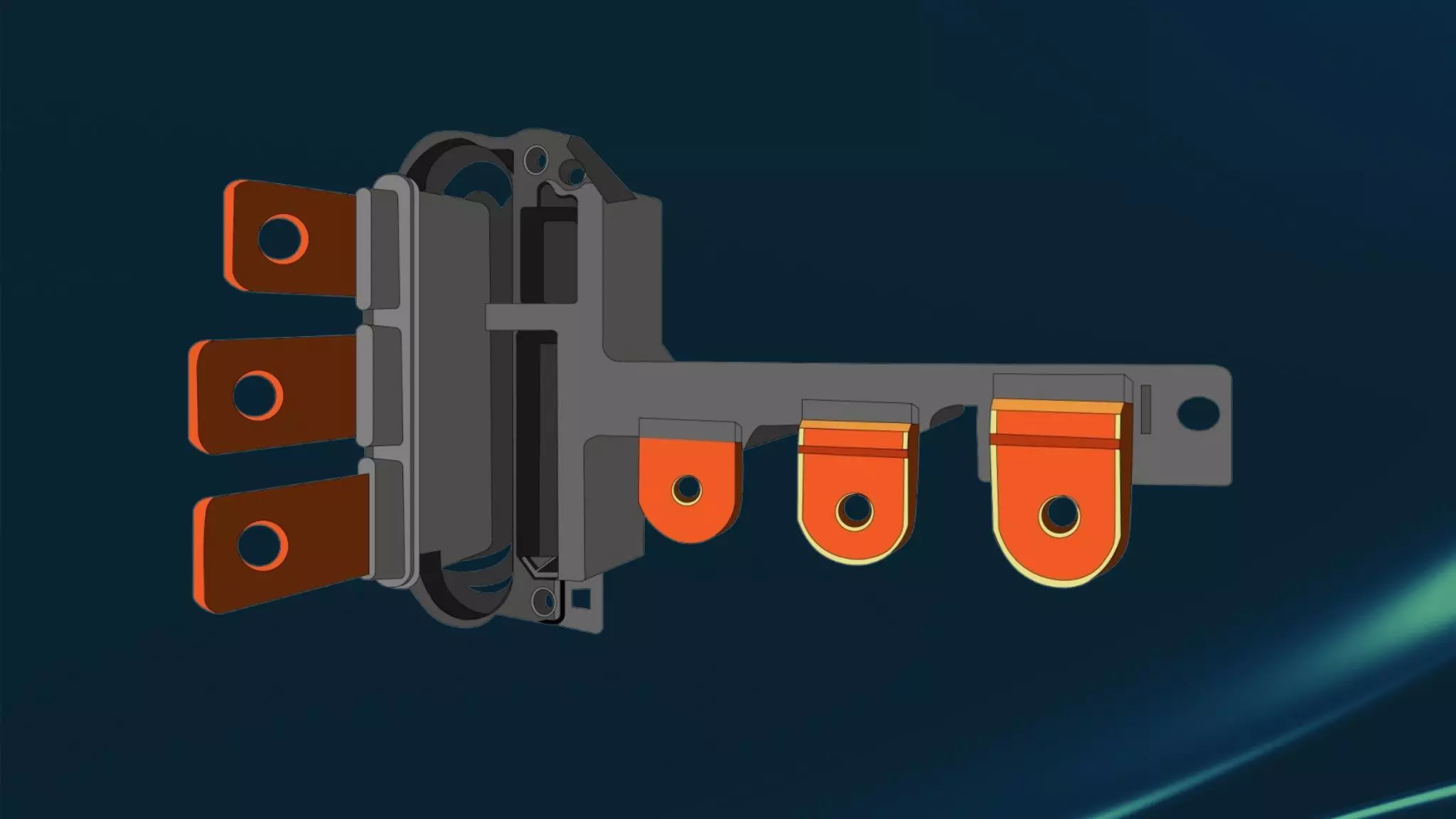
XytronTM M5080ET is primarily designed for busbars that must withstand temperatures above 150°C. The material exhibits over 70% higher stress crack resistance in thermal shock tests at temperatures between -50°C and 180°C compared to similar PPS compounds.
Image: Envalior
About Envalior
Envalior is a global leader in Sustainable & High-Performance Engineering Materials with annual sales of around €3 billion. The company’s broad portfolio includes PA6, PA66, PBT, PA46, PPS, TPC (TPE-E), PET, PA4T, PA410, and Thermoplastic Composites. With a global network of 18 production sites, 12 R&D centers, and more than 4,000 employees, Envalior serves key markets such as Mobility, Electronics & Electrical, and Consumer and Industrial Goods. The company was established in 2023 through the merger of Lanxess Performance Materials and DSM Engineering Materials. For more information, visit www.envalior.com.
Media/press enquiry
Thank you for your interest in Envalior. Please contact our global media relations team via the button below.