Press Release
By Adnan Hasanovic
Application Expert, Gears & Bearings, Envalior
Metal gears deliver strength, but in modern actuators they often add unnecessary weight, inertia, noise, and cost. For many applications, high-performance plastics can meet requirements while improving efficiency, NVH, and system cost. Stanyl® PA46 pushes those limits further, offering metal-like performance where standard plastics fall short, at a lower weight and more competitive cost.
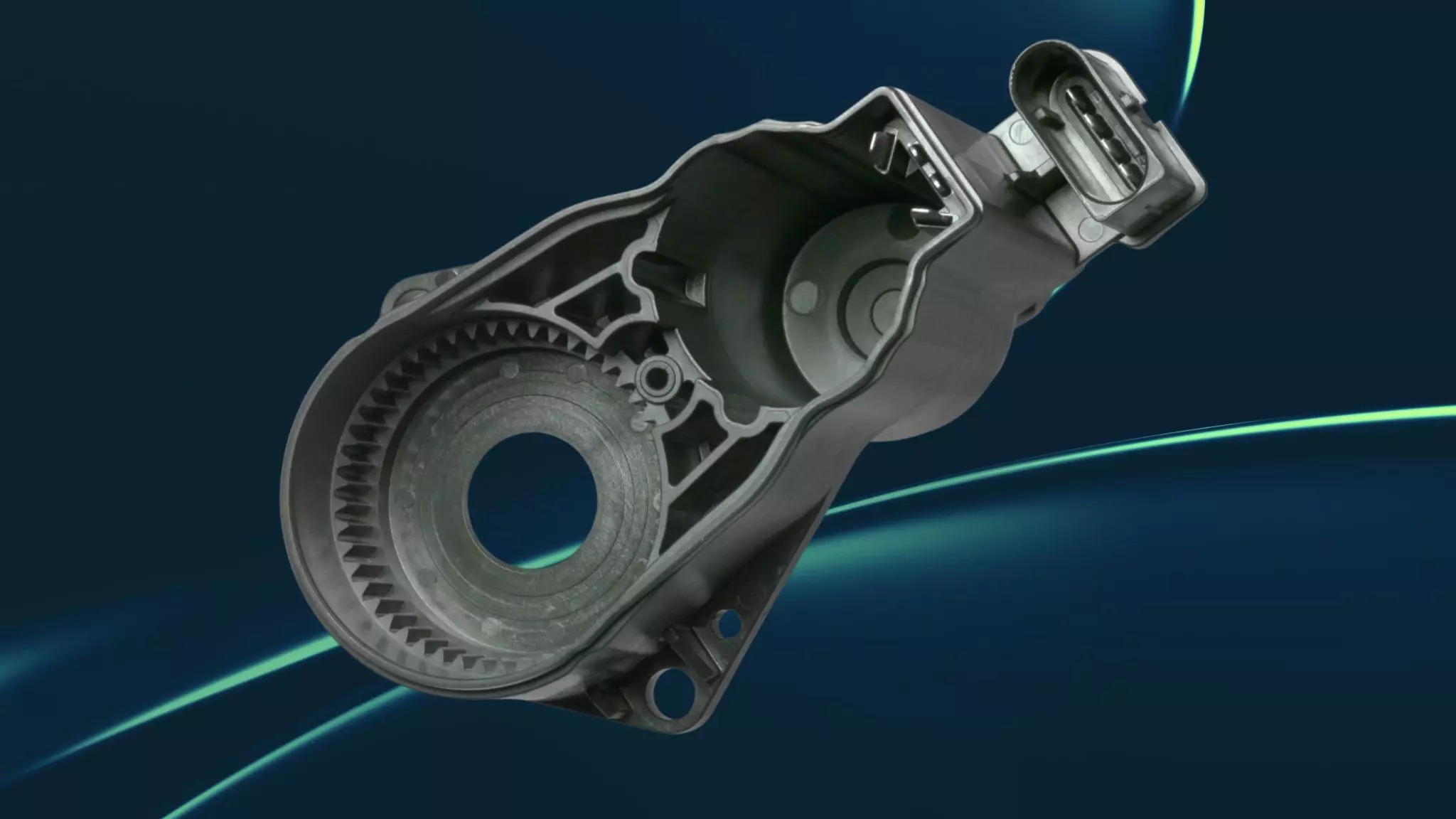
Metal is a popular gear material because it delivers strength, durability, and precision. But in many geartrains today, especially in compact, low weight and cost-effective actuators, that default choice can also lock in penalties that are harder to justify once you optimize the full system. Weight and rotational inertia of metal gearing can reduce efficiency and dynamic response. Noise can become a customer facing issue as actuators and drives get quieter. Plus, cost can climb quickly when machining and secondary operations are required in case of metal.
The question is no longer whether plastic can handle the load but is it necessary to pay for metal performance that the application does not need while creating new constraints when metals are chosen by default.
Modern vehicles rely increasingly on electric actuation across vehicle functions that used to be mechanical or hydraulic. At the same time, packaging space often keeps shrinking. That combination pushes gears into a tougher role. They are not only transmitting torque. They also influence efficiency, noise, vibration, and harshness (NVH) and total system cost.
If your program is driven by any of these targets, it may be time to rethink metal as the default. High-performance engineering plastics can offer:
Metal feels safe because it solves the strength and durability question early on. Yet, it can introduce problems later, for instance, when you start validating the full assembly. Higher inertia can work against efficiency targets; gear noise behavior can become harder to manage; and when cost pressure increases late in the program, it is rarely easy to remove machining steps from a design that was built around metal from day one.
In many programs, the result is a familiar tradeoff. You keep metal and accept the associated drawbacks and penalties, or you move to high-end and niche polymers and accept a steep increase in material cost.
High temperature performance polyamides are increasingly used in demanding gears that previously required metal. In the right design and operating conditions, they can deliver meaningful system benefits, including significant weight and inertia reduction that help increase operating efficiency, improve gear noise behavior, and lower part cost.
This is not about simply replacing metal with plastic. The key limitation is rarely a single material datasheet value. It is about designing around the known failure modes in plastic gears and understanding how the material behaves in the real duty cycle with load, temperature, lubrication conditions and the application’s lifetime targets in a given application case.
If you have ever tried to replace metal in a gear, you know the shortlist can be frustrating. Common candidates such as POM, PA66, PPS, and PPA can work well, but they do not always meet the combined temperature, torque, and lifetime requirements, especially in compact designs. Ultra high-end and niche polymers like PEEK can move the performance ceiling but often create a cost problem.
The decision is less about polymer families and more about finding a material that keeps the durability margin while improving the system level KPIs you are measured on.
Successful metal replacement is rarely a simple material change. It is often an iterative and controlled redesign process based on the real load cases the application experiences. In many actuators, that includes at least a static peak load case and a durability load case that determines lifetime performance of the given gear system.
Once those load cases are defined, targeted design choices can unlock plastic performance. That might mean optimizing tooth profile geometry, adjusting component size (gear diameter and width), or tuning the overall system, so the gear runs in a more favorable operating window, or a combination of each of these. The point is simple: treating metal replacement as an engineering exercise rather than a sourcing change allows the outcome to be more predictable. Thus, the validation risk drops.
Stanyl® PA46 is designed for demanding gear applications where standard plastics often reach their limits, and where a more cost-effective option is needed. It delivers a strong balance of temperature capability, torque performance and wear behavior and durability while still targeting weight reduction, compact size, improved noise behavior, and competitive cost versus metal solutions.
If any of these apply to your application, Stanyl® PA46 is worth evaluating, especially when:
Metal replacement programs often fail for one simple reason: failure modes analysis and validation happen too late during the development process. If issues such as tooth fracture, wear, creep, deformation, or noise issues emerge during late-stage validation, the redesign loop quickly becomes expensive.
That is why early screening and application development support is critical. The fastest path is to combine material expertise with design know-how and representative testing, so you can converge on a robust solution before tooling and release decisions lock your options.
If you are designing high performance gears for actuators and gear drives used in automobiles, consumer appliances, or robotics, and your goals include reducing weight, noise, or cost without compromising performance, it is often worth challenging the metal by default.
Learn more about gears and actuation solutions and support here.

Adnan Hasanovic is application expert for actuators and bearings at Envalior. In his global role he focuses on tribological applications, such as gears, bearings, and wear and friction bushings, as well as structural applications including actuator housings and covers. Adnan also supports global Envalior activities in existing and new application fields. He joined Envalior after he completed studies of mechanical engineering. Before joining Envalior, Adnan worked as CAE engineer and application development engineer.