

Press Release
By Adnan Hasanovic
Application Expert, Gears & Bearings, Envalior
Automotive actuators operate throughout modern vehicles and must deliver high performance, reliability, and compact design across different environments. As an engineer, you often need to balance these requirements within limited packaging space. Instead of starting with standard material choices, engineers can first design around critical interfaces and then select materials that ensure long-term performance.
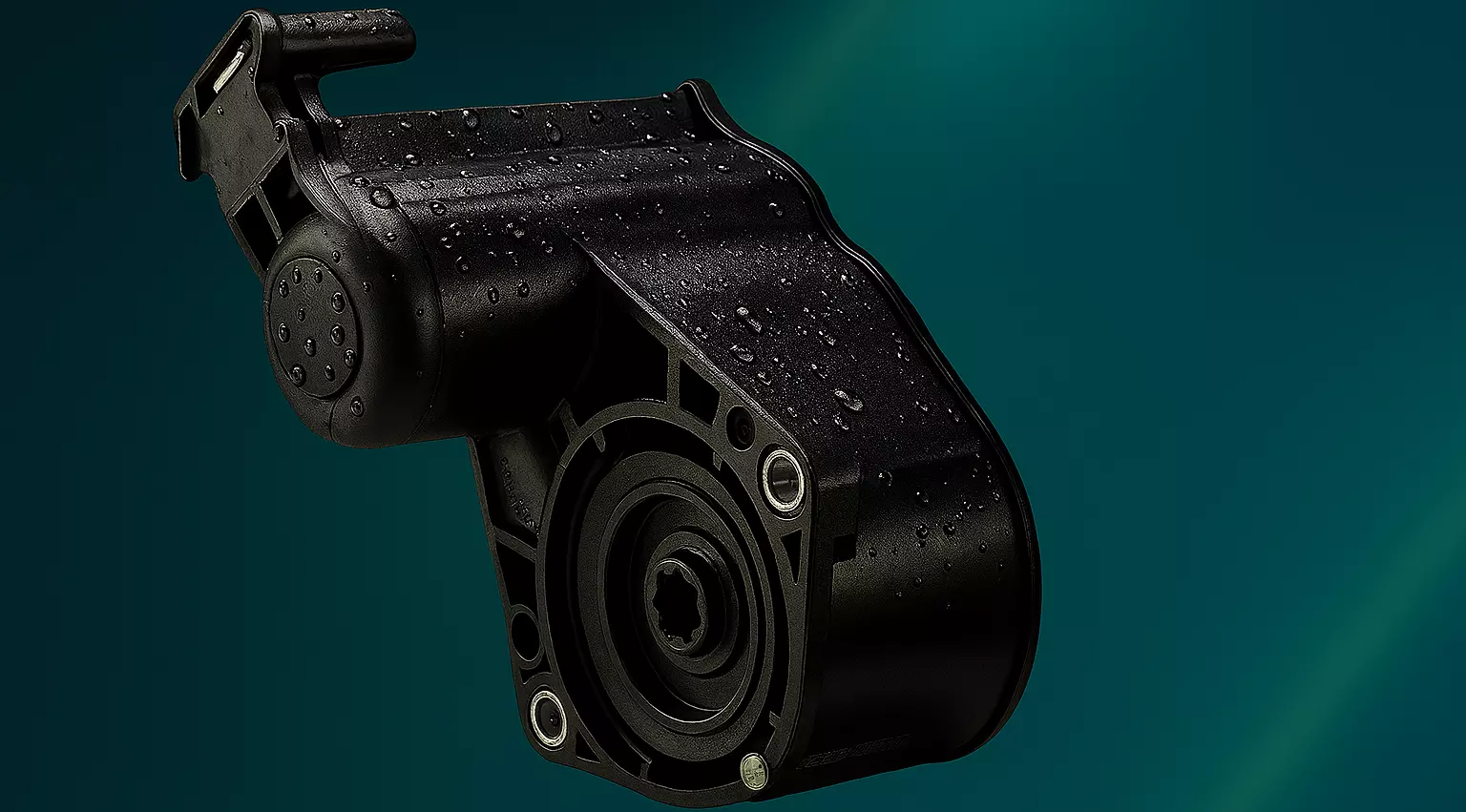
Automotive actuators are found in very different corners of the vehicle, but they are all moving in the same direction: more performance in less space. A throttle control actuator faces different demands than a coolant valve. A turbo actuator operates in a completely different environment compared to a mirror actuator. Yet across applications, expectations are often very similar, if not identical.
These demands are exactly why actuator housings and covers can no longer be treated as simple plastic components.
Actuators now support critical efficiency, safety, and comfort functions across modern vehicles.
Examples include:
What makes this landscape challenging is that not all actuators live in the same environment. Dependent on the application conditions, a different set of performance requirements is often needed, both from a design and material perspective.
Some actuators operate near cabin-like conditions. Others sit under the hood, where heat, humidity, vibration, and chemical exposure become continuous stress factors rather than one time validation events. That difference ultimately defines housing performance requirements.
When you start discussing materials, the conversation often begin with a familiar shortlist. But actuator housings rarely fail because engineers chose the wrong polymer family. Instead they fail because the design requires several properties simultaneously, while standard grades are usually optimized for only part of the challenge.
In reality, most actuator housings and covers must deliver:
Inside compact packaging spaces, these requirements start to compete with each other. Increasing stiffness can increase warpage risk. Black parts can interfere with laser energy transmission. Moisture and heat can quietly reduce long term strength retention.
The result is a design that looks fine on paper, but becomes challenging in real life conditions.
Housing related problems are known for appearing late in development, often after multiple validation loops.
In early prototypes, everything often looks perfect because:
This is why housings and covers often become late stage program risks. Not because they are geometrically complex, but because they sit at the intersection of tolerances, sealing, assembly, and environmental exposure.
Instead of selecting a material first and adapting the design afterwards, start by defining the interfaces that must remain stable throughout actuator lifetime.
Key questions you should ask include:
Once you define these requirements, material selection becomes far more application specific.
PA6 may offer attractive ductility and impact behavior, but introduces moisture-related dimensional changes. PA66 can improve temperature capability and strength, but still requires careful control of humidity effects. PBT provides very low moisture absorption and strong dimensional stability, which often makes it a natural fit when sealing and tolerance retention dominate.
For the most demanding environments, also higher performance thermoplastics may be necessary to ensure long term reliability, for example PPA and PPS.
Actuators may appear to be small components, but their housings and covers increasingly define whether the entire system can deliver torque, durability, low noise, and reliable sealing inside a compact package.
If you treat actuator housing and cover components as performance-defining parts early in the development, the risk moves out of late stage validation and into early stage engineering where it belongs.
Learn more about actuator housings and covers.

Adnan Hasanovic is application expert for actuators and bearings at Envalior. In his global role he focuses on tribological applications, such as gears, bearings, and wear and friction bushings, as well as structural applications including actuator housings and covers. Adnan also supports global Envalior activities in existing and new application fields. He joined Envalior after he completed studies of mechanical engineering. Before joining Envalior, Adnan worked as CAE engineer and application development engineer.
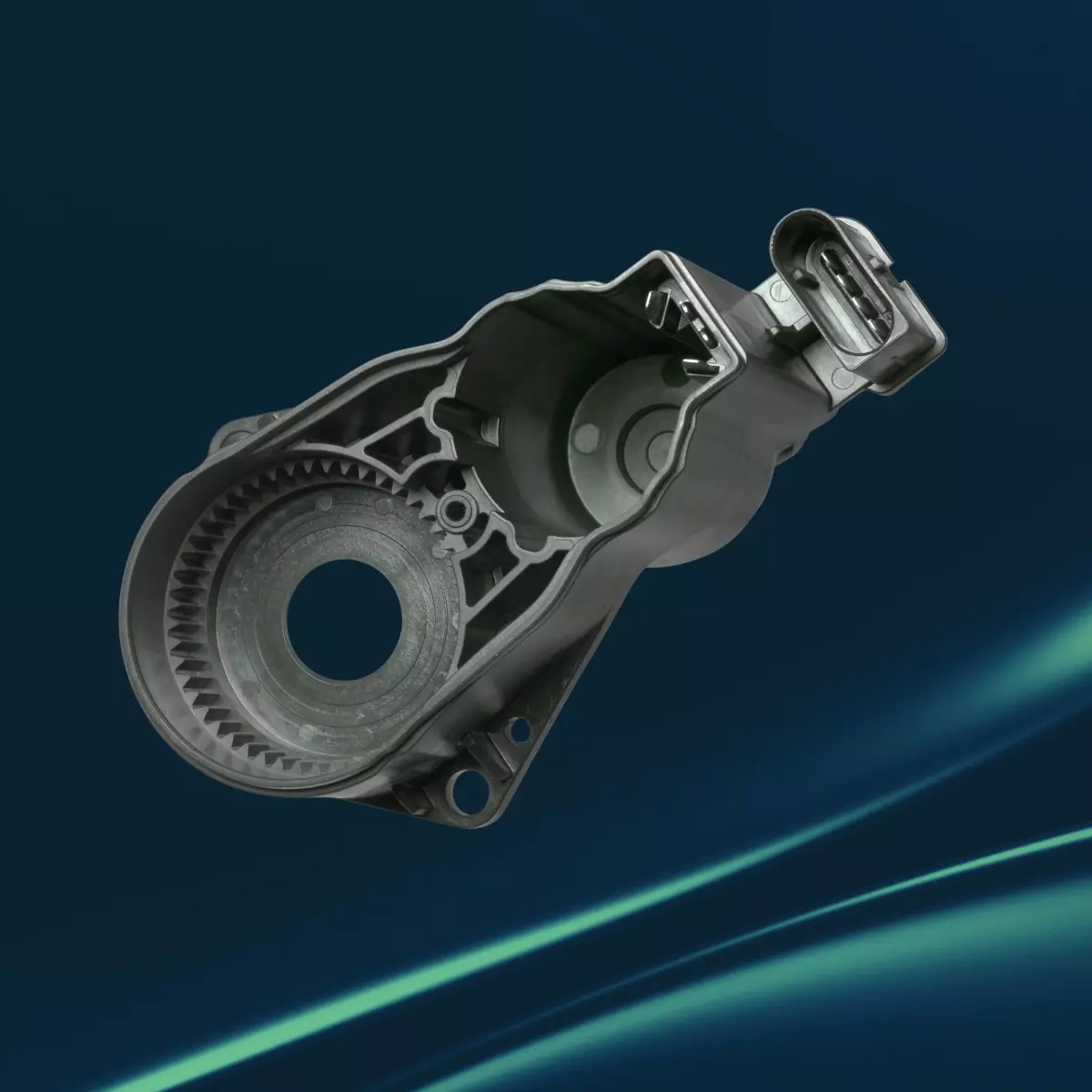
Metal gears deliver strength, but in modern actuators they often add unnecessary weight, inertia, noise, and cost. For many applications, high-perform...